Updated system: 6 zones
The sixth zone adds what the five-zone model lacked: an internal barrier against sand, dry winds, and dunes. The project is protected not only from the ocean but also from the desert.
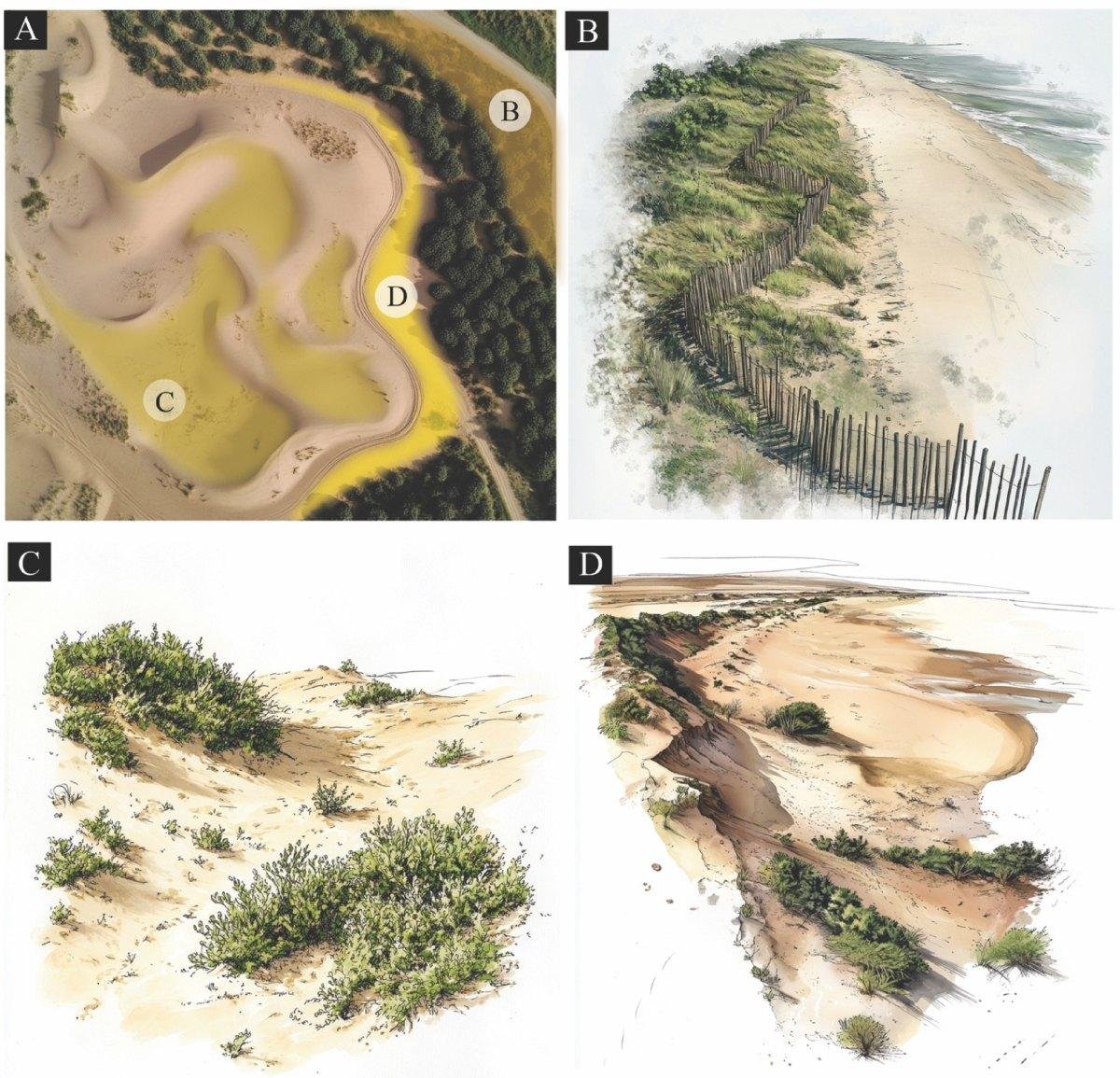
Double-sided protection
Why Five Zones Are Not Enough
Five zones adequately describe the transition from the ocean to the inland agricultural system. However, the coastal desert faces threats from two directions: salty ocean winds from the west and sand movement, dry winds, and degradation from the inland side. Therefore, the system must have a sixth zone.

Shifting dunes are the source of the problem on the interior side of the project.
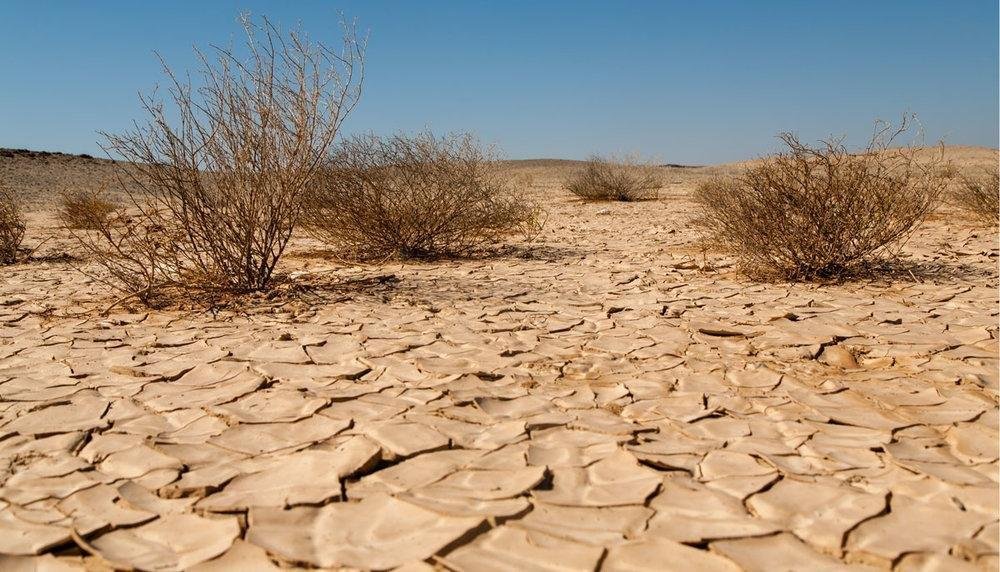
The anti-dune zone should slow down the sand before it reaches the productive zones.
Complete table of the six zones
| Zone | Distance | The main factor | The main task |
|---|---|---|---|
| Zone 1 | 0-30 m | salt and spray | survival |
| Zone 2 | 30-100 m | strong salt | consolidation |
| Zone 3 | 100-300 m | moderate salt | soil formation |
| Zone 4 | 300-800 m | weak salt | production |
| Zone 5 | 800 m - 2 km | almost no salt | agrosystem |
| Zone 6 | 2-5 km | wind and dunes | anti-sand protection |
Zone 6: Internal Barrier
Zone 6 is no longer coastal. It's a zone of sand movement, dry winds, and degradation. If ignored, sand will gradually destroy the results of work in zones 1-5: burying the microrelief, drying the soil, and putting pressure on young vegetation.
the sand is constantly moving;
the wind dries the soil and increases evaporation;
moisture is not retained without relief and roots;
the zone becomes a source of problem for the entire corridor.
Plant-based zone 6
| Group | View | Latin name | Role |
|---|---|---|---|
| Herbs | Panicum | Panicum turgidum | dune stabilization |
| Herbs | Laziurus | Lasiurus scindicus | sand stabilization |
| Herbs | Cenchrus | Cenchrus ciliaris | pasture and cover |
| Herbs | Stipagrostis | Stipagrostis spp. | fixation of dry sands |
| Herbs | Aristide | Aristida spp. | desert cover |
| Shrubs | Calligonum | Calligonum comosum | dunes and sand ridges |
| Shrubs | Broom | Retama raetam | nitrogen and shrub framework |
| Shrubs | Ziziphus lotus | Ziziphus lotus | barrier and shelter |
| Shrubs | Leptadenia | Leptadenia pyrotechnica | sand and dry winds |
Geometry is more important than single plantings
In zone six, plants must work in tandem with the surface's shape. Without geometry, the planting won't retain sand. What's needed are stripes across the wind, grids, waves, ridges, and repeating patterns that first slow down the sand and then give the plants a chance to establish their roots.
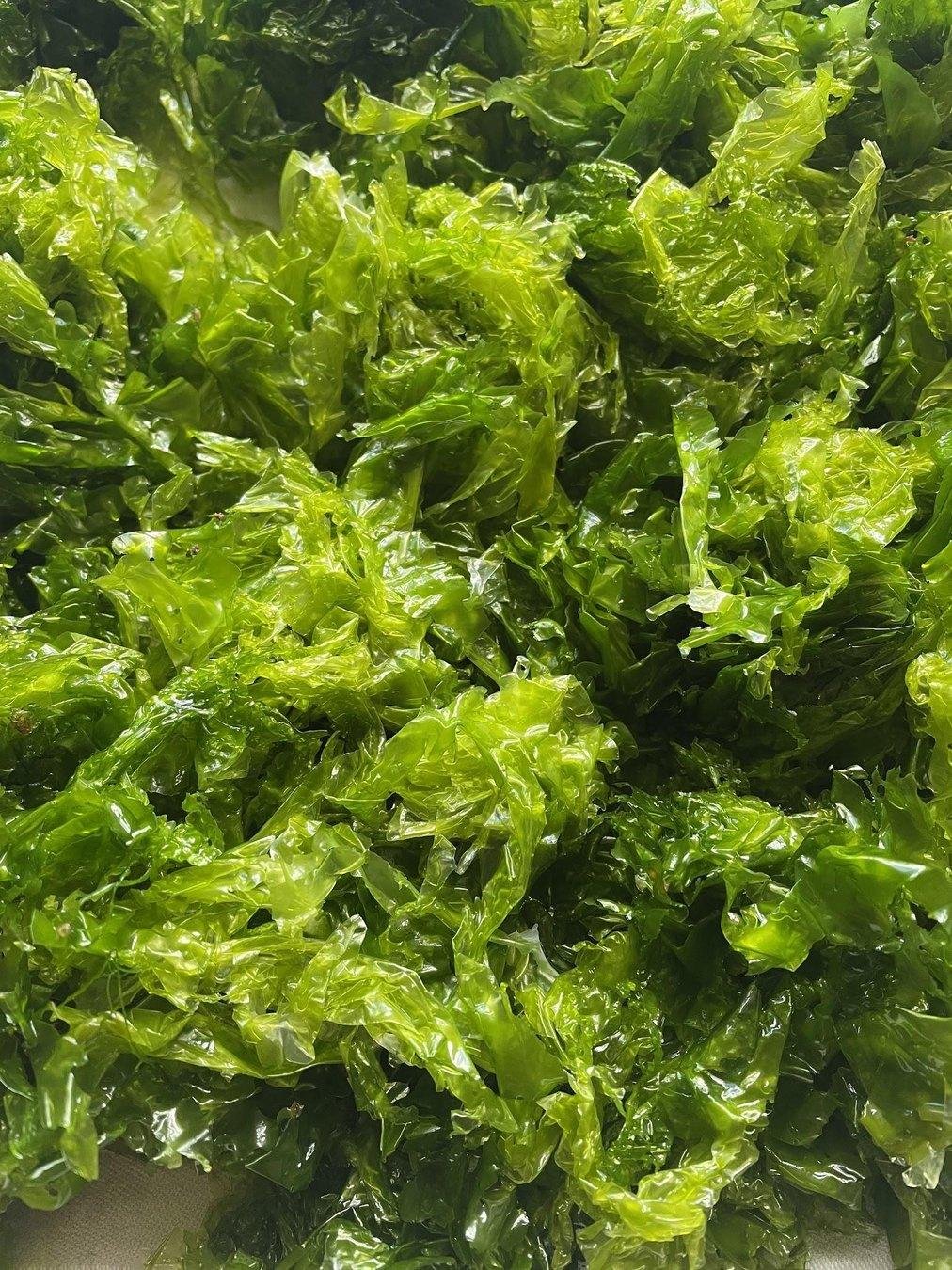
The internal barrier should work as a system of strips, cells and vegetation.
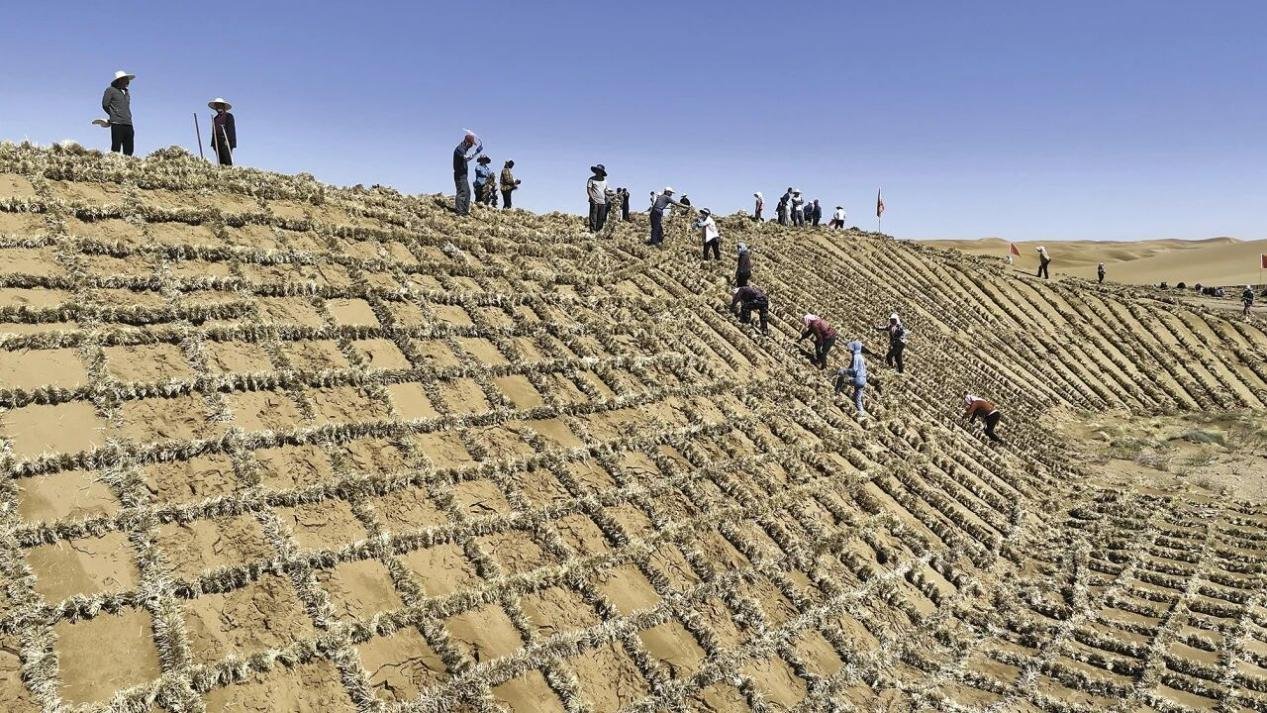
Cellular fixation is applicable as a starting geometry in sandy areas.
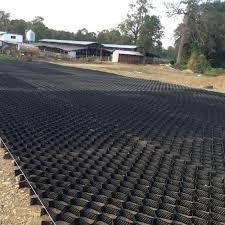
The shaped blocks help create roughness and stop sand transfer.
How the system works together
| Part of the system | What does it do? |
|---|---|
| Zone 6 | stops sand and dry wind before entering the project |
| Zones 5-4 | create an agricultural system, water, feed and productive part |
| Zones 3-4 | form the soil and biological basis |
| Zones 1-2 | dampen salt, spray, and direct ocean stress |
| The whole system | receives two-sided protection: from the ocean and from the desert |
The main risk
If only the coastal zone is developed, the project may look logical on the map but remain vulnerable. Sand from the inland area will move toward zones 1-3 and erode accumulated soil, moisture, and young plantings.
A strong formulation for the project: two-sided protection of the ecosystem – the ocean plus the desert.
Practical conclusion
Zone 6 is critical for scaling DREVO. Without an internal dune barrier, the green corridor remains a partial solution. With zone 6, the system becomes closed: it intercepts salt from the ocean and sand from the desert.