General logic of the budget
The budget for 1 km of a pilot should be calculated not as the cost of planting, but as the cost of launching a working system: wind, terrain, water, soil, greenhouses, and only then plants.
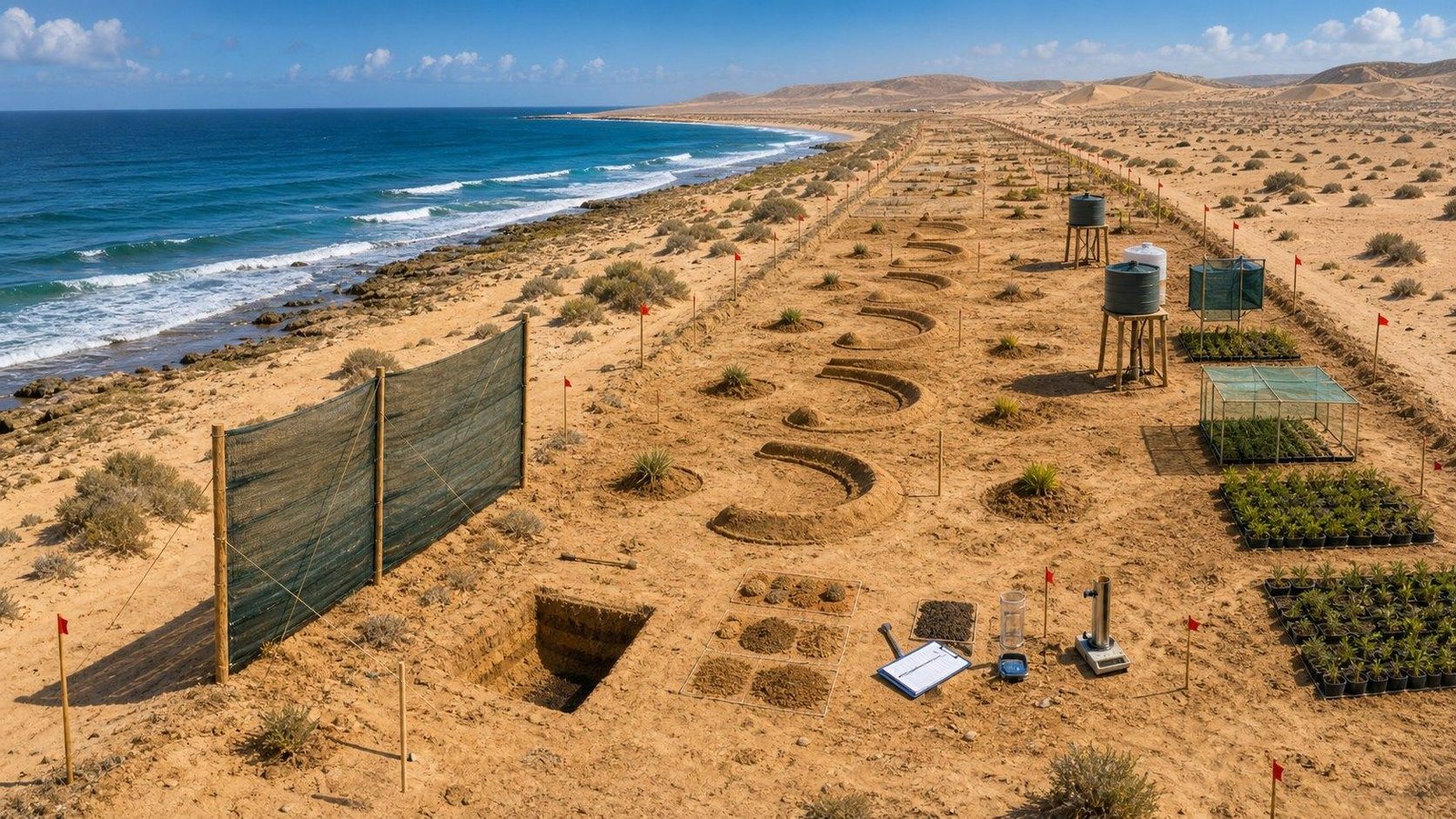
Order of expenses
Money is spent in the correct sequence
The budget logic is simple: wind → terrain → water → soil → greenhouses → plants. If you reverse the order and start with mass plantings, plant, water, and labor losses could increase two- to threefold.
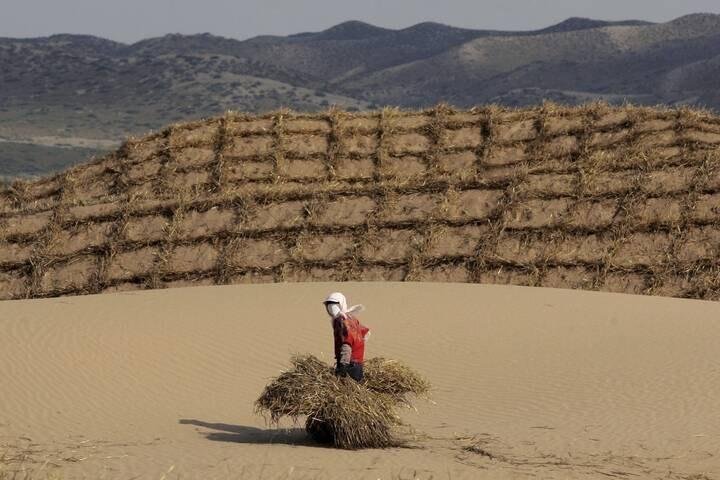
Sand stabilization: the first low-cost barrier against wind and shifting dunes.

Microrelief: zai-pits and water-collecting depressions increase the survival rate of plantings.
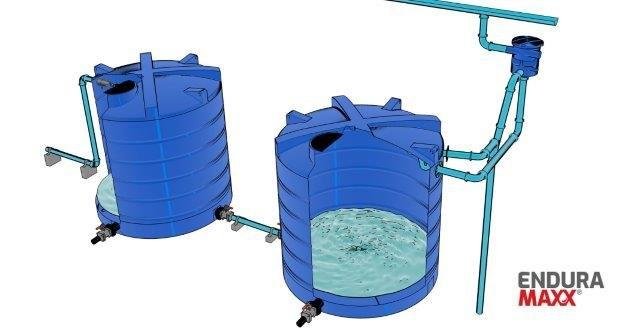
Water: reservoirs and simple wiring are more important than the decorative part of the project.
Budget per 1 km: summary
| Block | Minimum | Working level | Intensively |
|---|---|---|---|
| Markup and analysis | 1 000 € | 2 000 € | 4 000 € |
| Sand stabilization | 5 000 € | 12 000 € | 25 000 € |
| Microrelief: trenches and pits | 8 000 € | 20 000 € | 40 000 € |
| Water system | 10 000 € | 25 000 € | 60 000 € |
| Compost and soil | 5 000 € | 12 000 € | 25 000 € |
| Greenhouses | 6 000 € | 15 000 € | 30 000 € |
| Planting material | 4 000 € | 10 000 € | 20 000 € |
| Logistics | 3 000 € | 8 000 € | 15 000 € |
Benchmark: minimum pilot around €40,000, working level around €100,000, a strong project can exceed €200,000. Realistic bar for a manageable 1 km pilot: €80,000-120,000.
Resources by Block
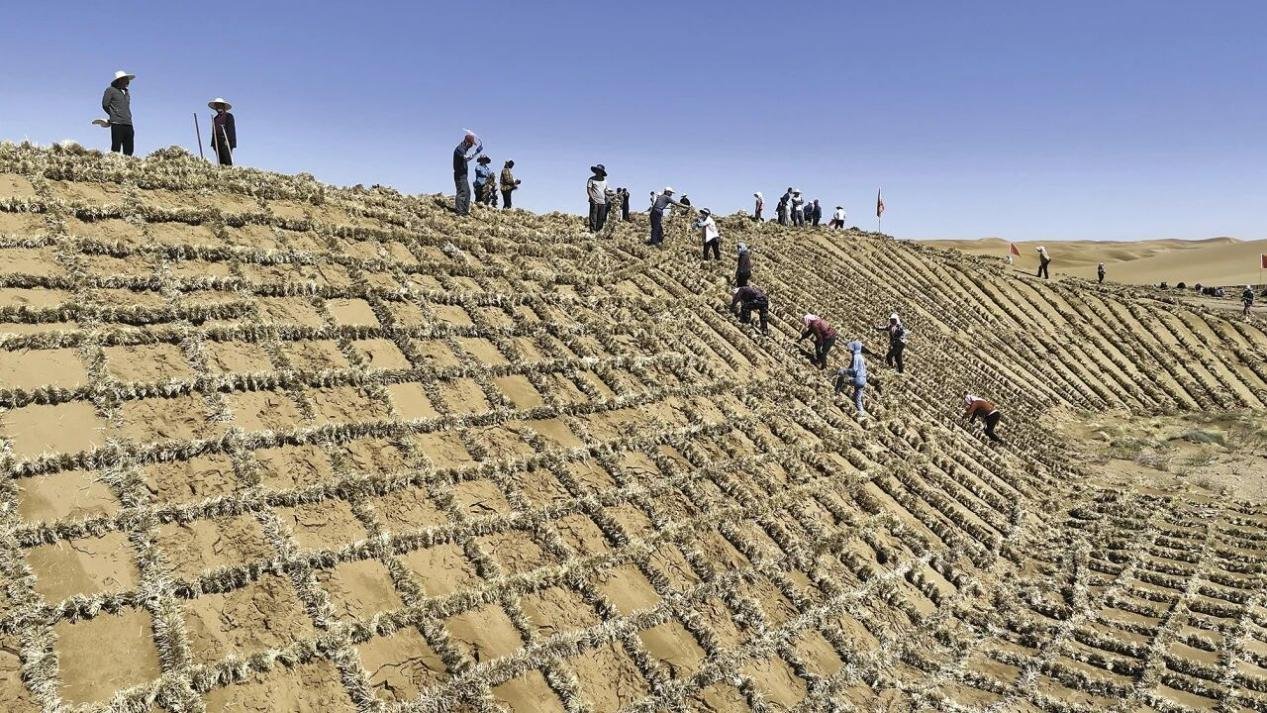
Sand protection requires local materials, manual labor, stakes and simple markings.
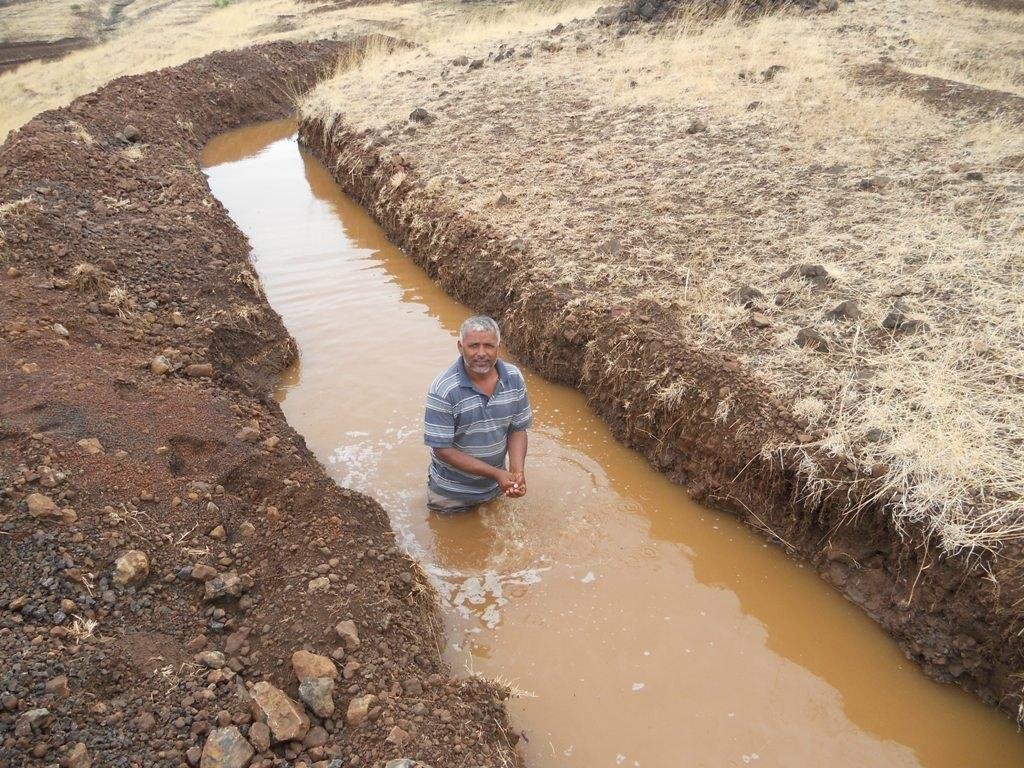
Contour trenches and low embankments require machinery or an organized hand crew.
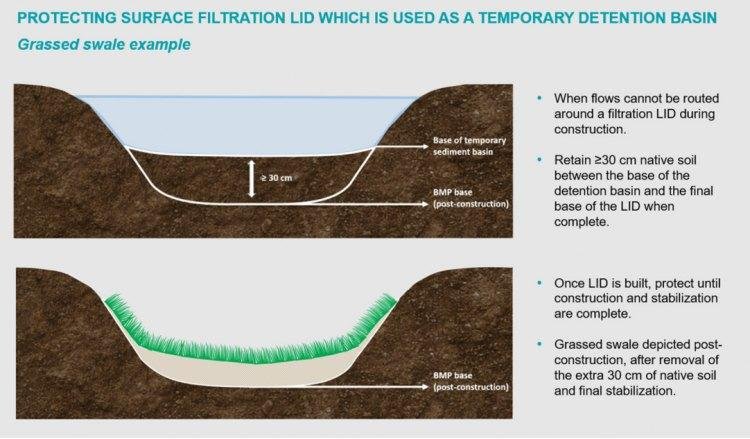
Protection of swale ditches is important: without it, the microrelief is quickly destroyed by wind and runoff.
| Block | What is needed | 1 km rating |
|---|---|---|
| Sand stabilization | straw or branches, stakes, nets, simple tools | 5 000-25 000 € |
| Microrelief | mini-excavator or 6-10 people manually, marking, trenches, half-holes | 8 000-40 000 € |
| Water | solar distillers, 1000L IBC tanks, pipes, drip | 10 000-60 000 € |
| Soil | algae, organic matter, compost, mulch, biocrust | 5 000-25 000 € |
| Greenhouses | 4-6 simple or semi-buried greenhouses | 6 000-15 000 € |
| Planting material | seeds, seedlings, saplings, replacement of losses | 4 000-20 000 € |
| Logistics | transport, storage, delivery of water and materials | 3 000-15 000 € |
Water, soil and greenhouses
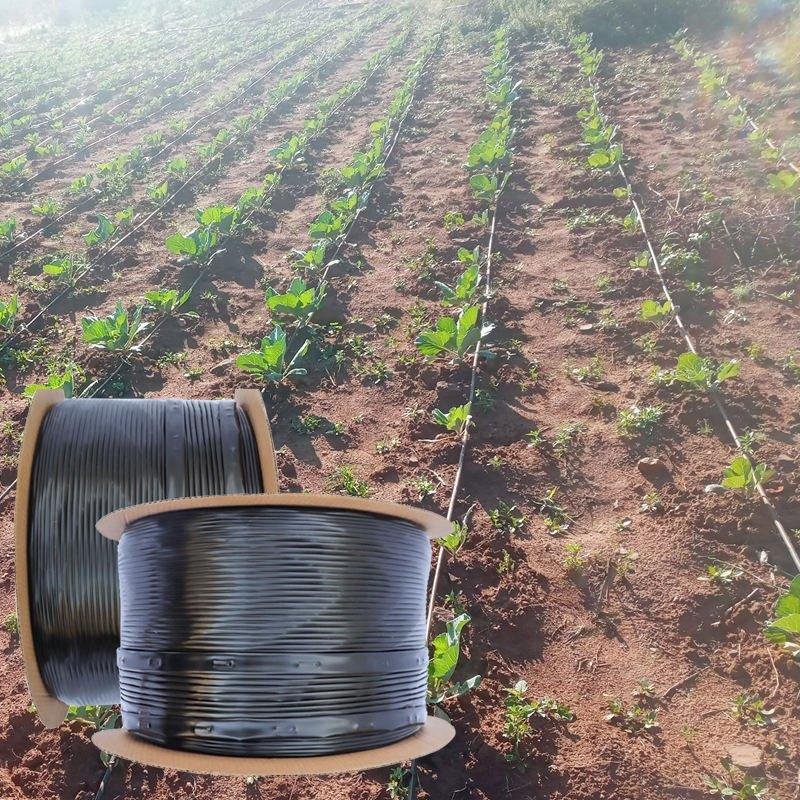
The drip line reduces water consumption and makes the pilot measurable.
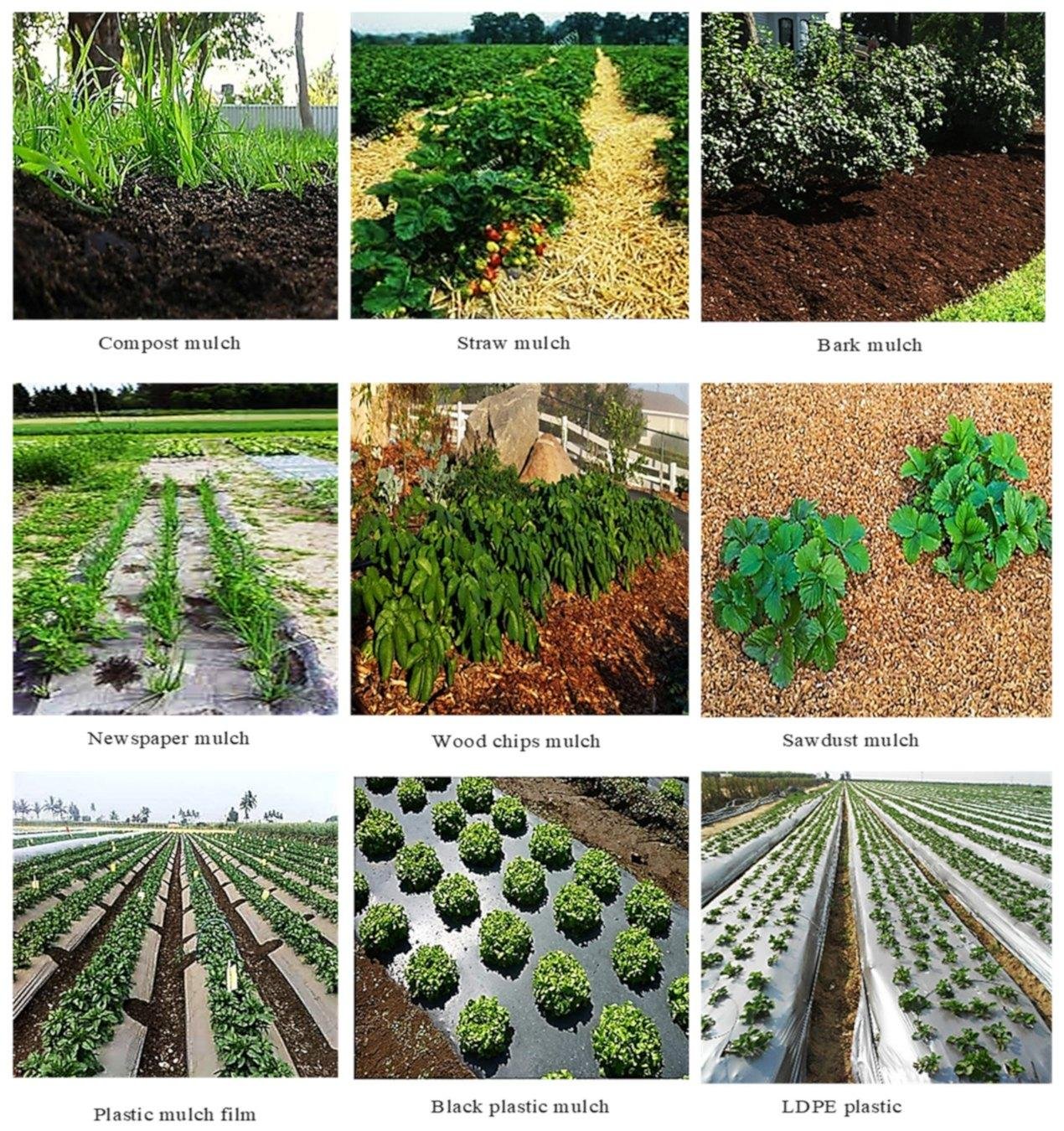
Mulch and compost retain moisture; without them, water quickly drains from the sand.
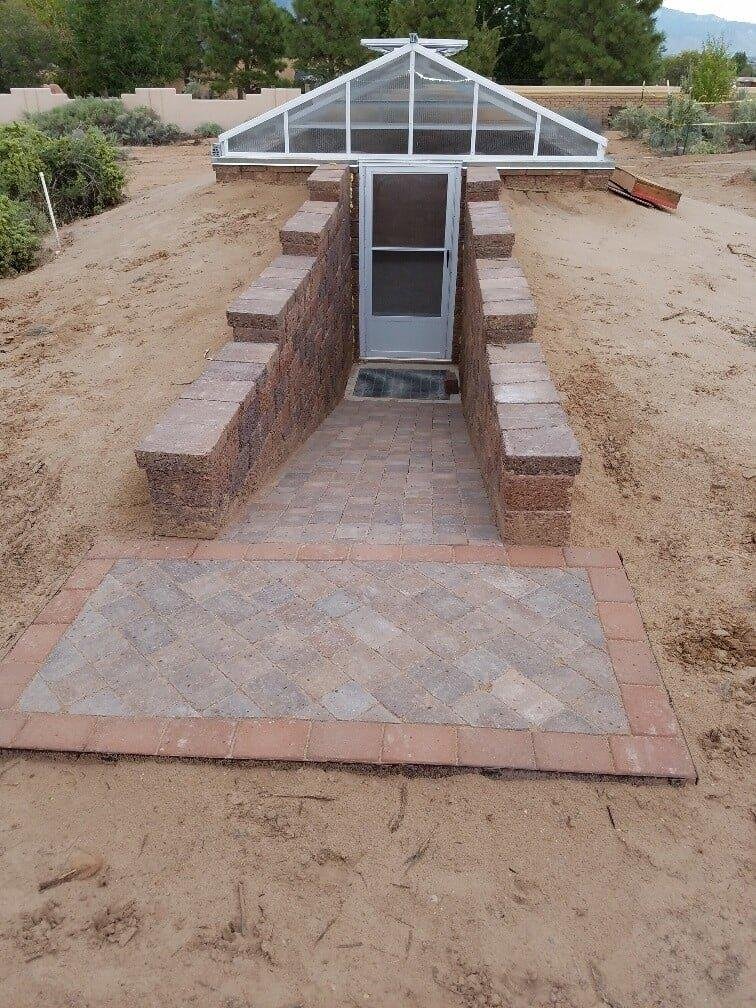
A semi-buried greenhouse protects seedlings from overheating, wind and drying out.
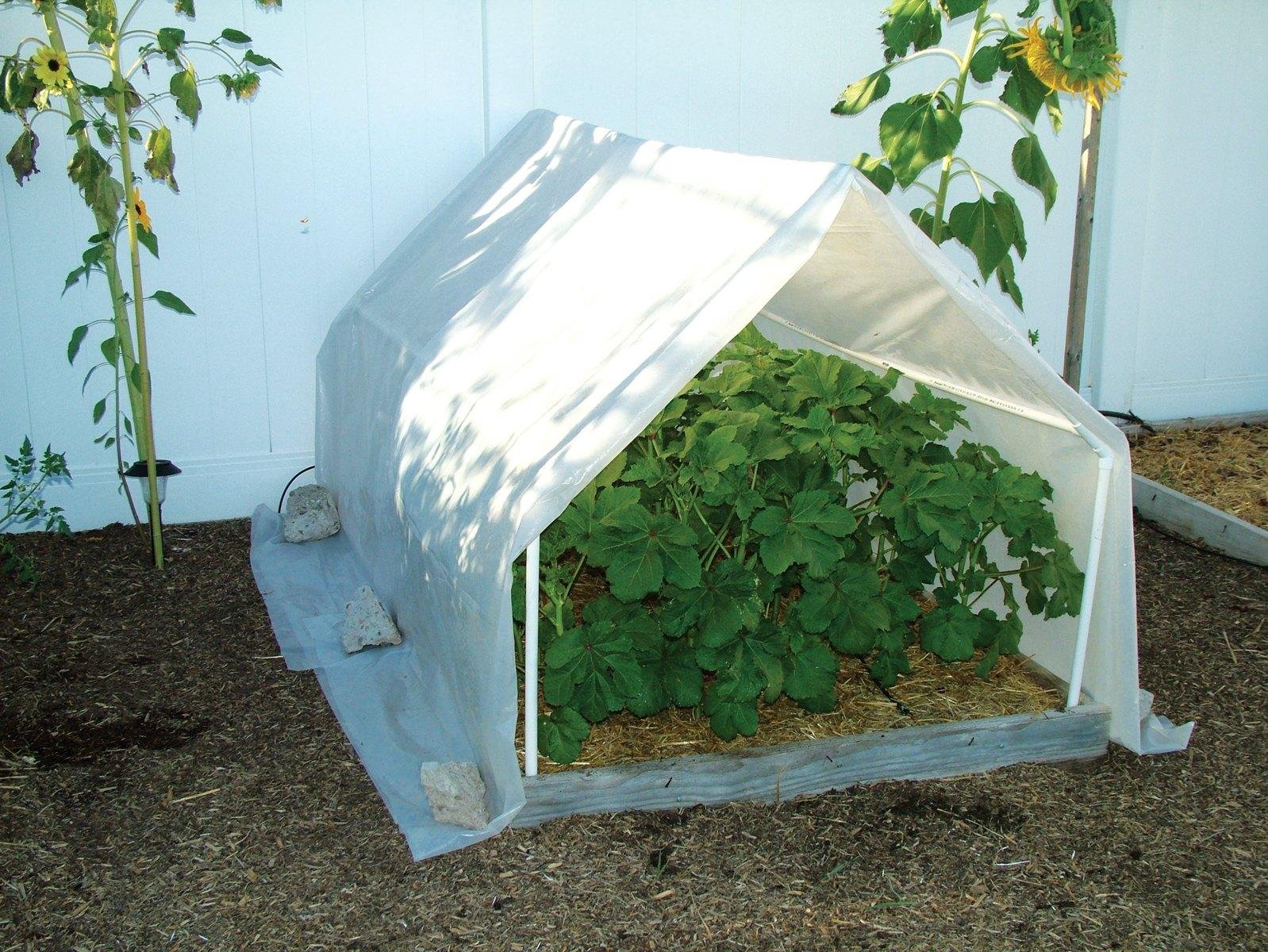
Simple cold frames help to grow planting material inexpensively.
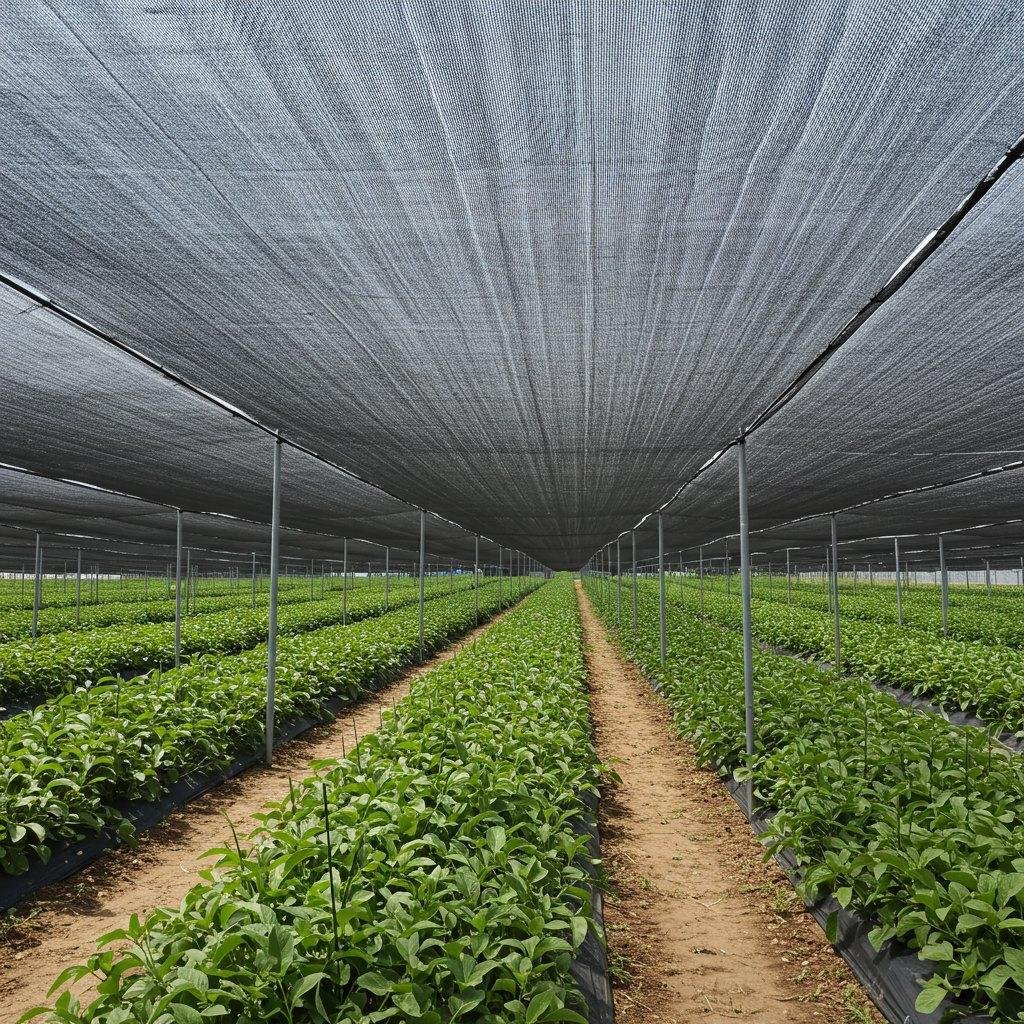
Shading net reduces stress on seedlings and young plants.
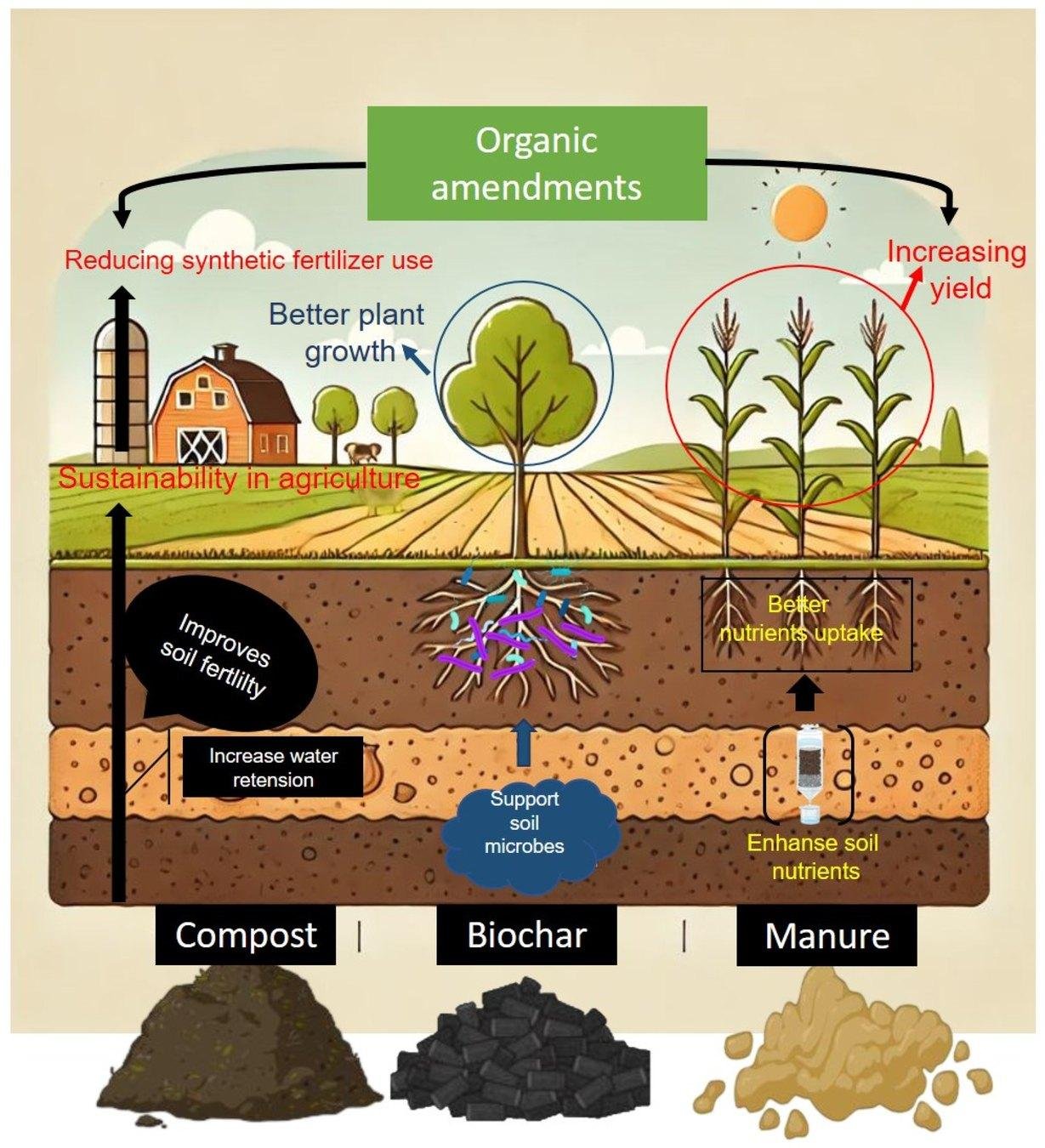
Organic coverings and mulches become part of soil formation.
People and work schedule
| Format | Team | When it suits |
|---|---|---|
| Minimum | 4-6 people | short test 100-200 m, manual work, local materials |
| Working version | 8-12 people | 1km controlled pilot with water, greenhouses and monitoring |
| Intensive | 15-25 people | quick start, lots of micro-relief, parallel teams |
Where to save and where not to
| You can save money | You can't save money |
|---|---|
| algae and local organic matter | water and reservoirs |
| manual labor instead of technology on a small pilot | microrelief and water retention |
| local materials for barriers | wind protection |
| simple greenhouses and nets | monitoring survival, salt and humidity |
The best strategy: don't start with a full kilometer. Start with 100-200 meters, then check, adjust, and scale up. This approach is cheaper than making a mistake across the entire section.
Honest conclusion
The 1-kilometer pilot isn't just a cheap decorative landscaping project. It's an engineered ecological module where money buys not just plants, but sustainability: wind reduction, water retention, soil stimulation, seedling flow, and a clear model for expansion.