Edible and forage grasses
The basis of the forage system and food grass layer: pasture, salt-tolerant, nitrogen-fixing and edible grasses for protected areas DREVO.
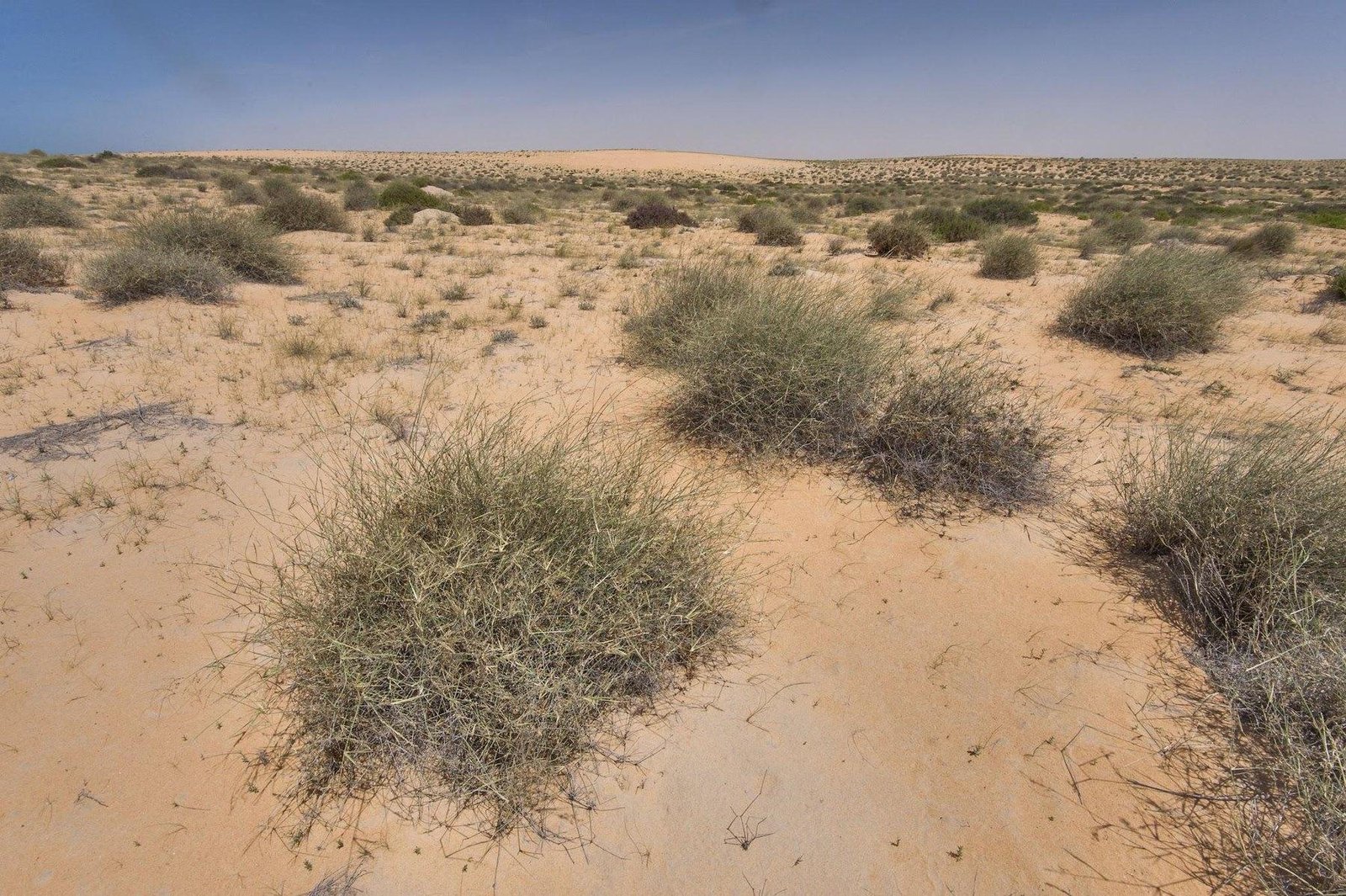
Article by DREVO
The role of the herbaceous layer
Grasses are not merely decorative. In a coastal green corridor project, they cover the sand, provide organic matter, reduce soil overheating, and provide the first food source.
Edible grasses and forage crops should be separated by their level of reliability. Species that tolerate drought, salt, and wind are planted first. More productive forage and food plants are added only after irrigation, shade, and a protected microclimate are established.
Article images
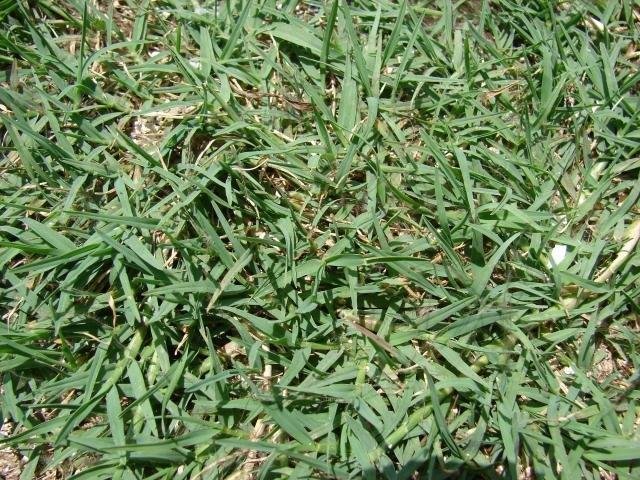
Bermuda grass: a basic forage cover from the source
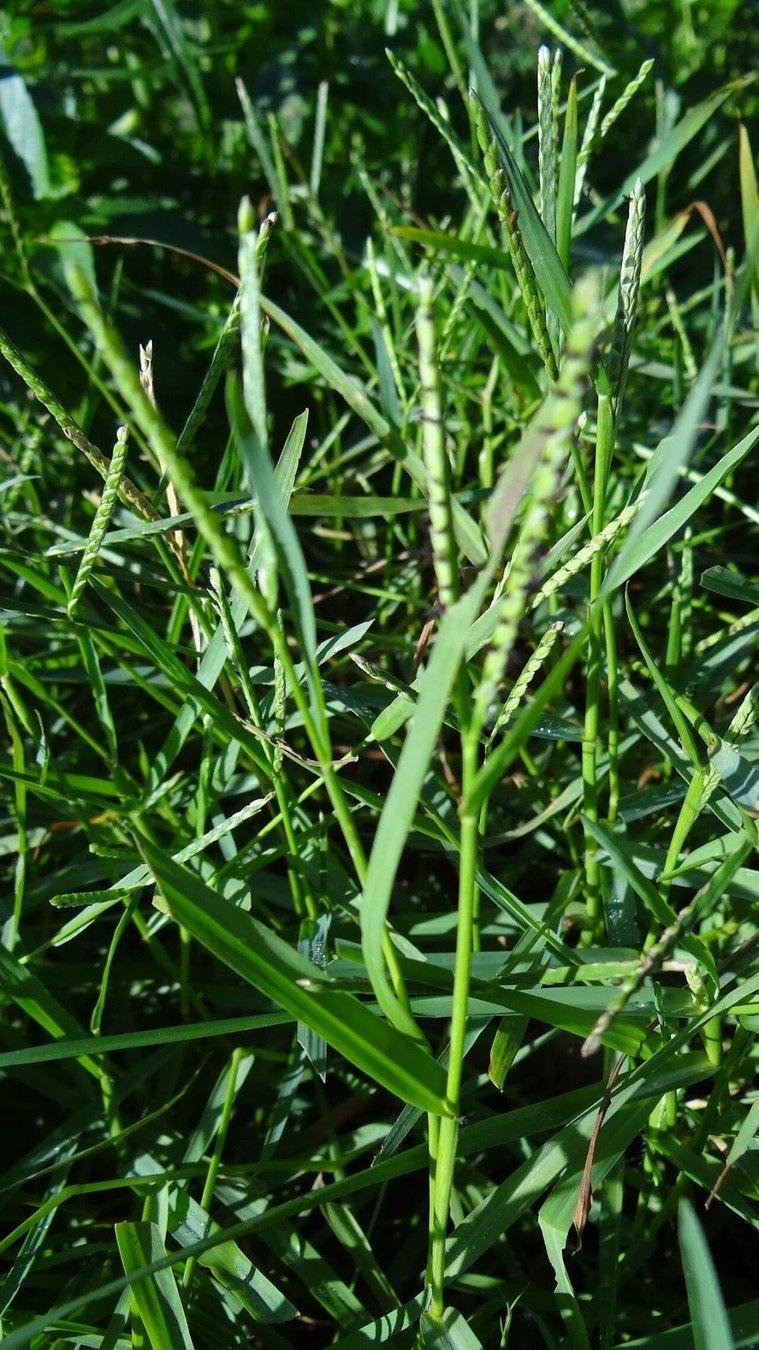
Salt-tolerant forage grass for wet and protected microzones
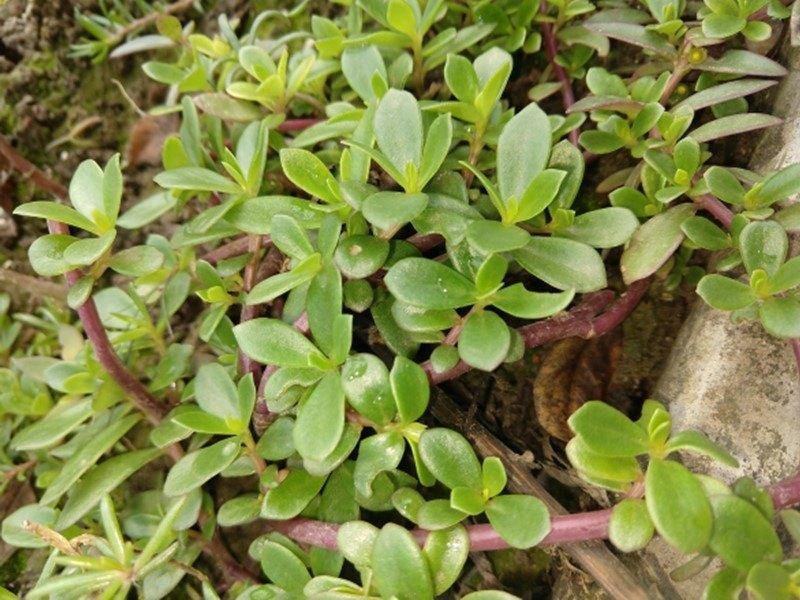
Purslane: one of the most resilient edible species
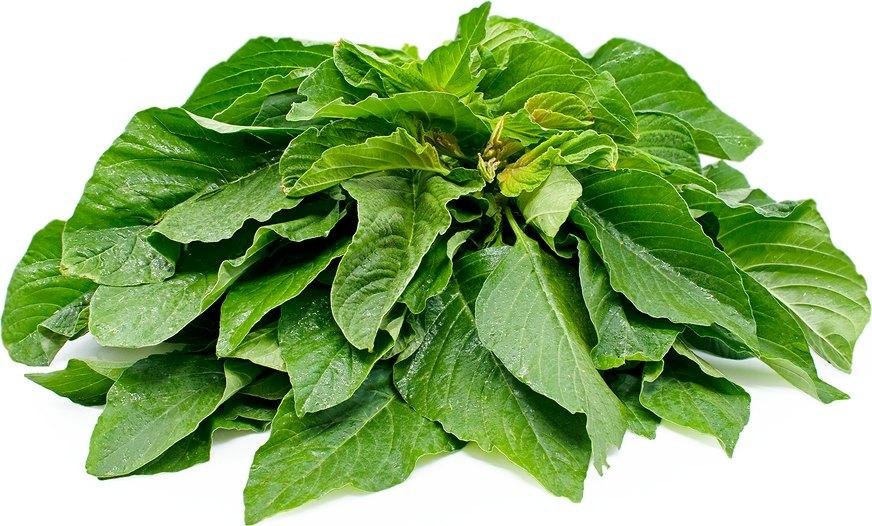
Amaranth: Nutritious greens for protected beds
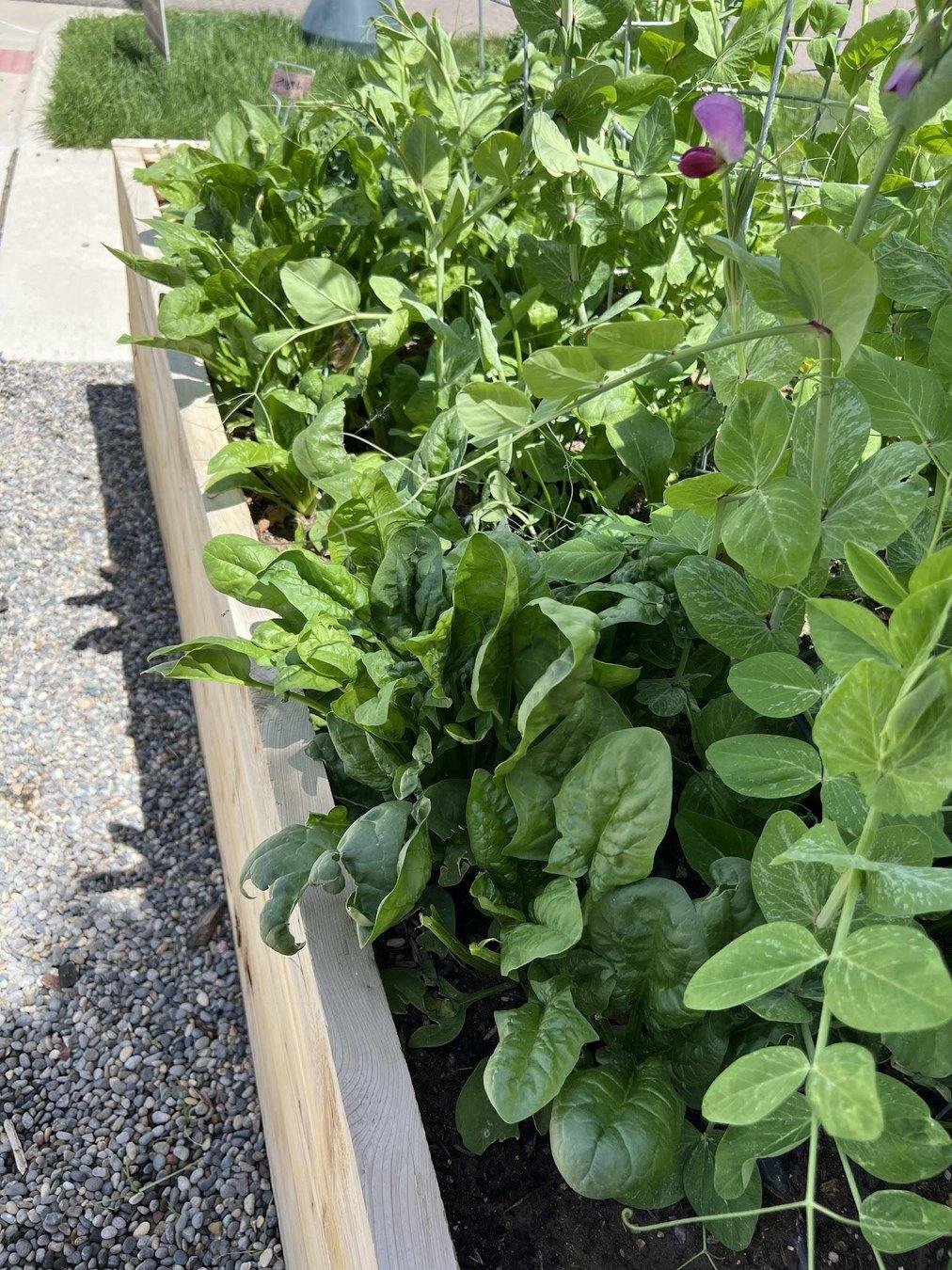
Edible greens can be grown in partial shade and with controlled moisture.
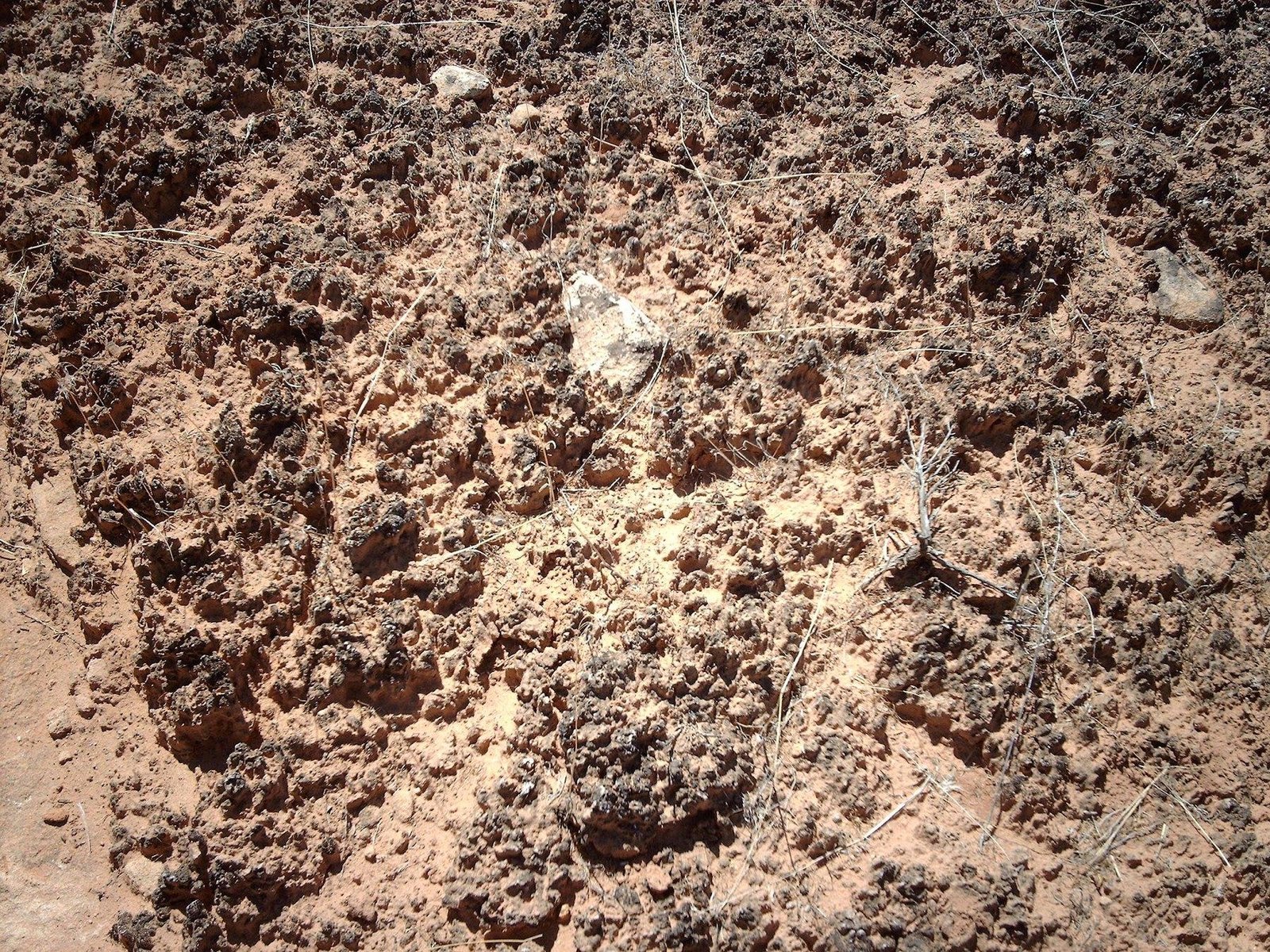
Soil and biocrust retain moisture for the grass layer
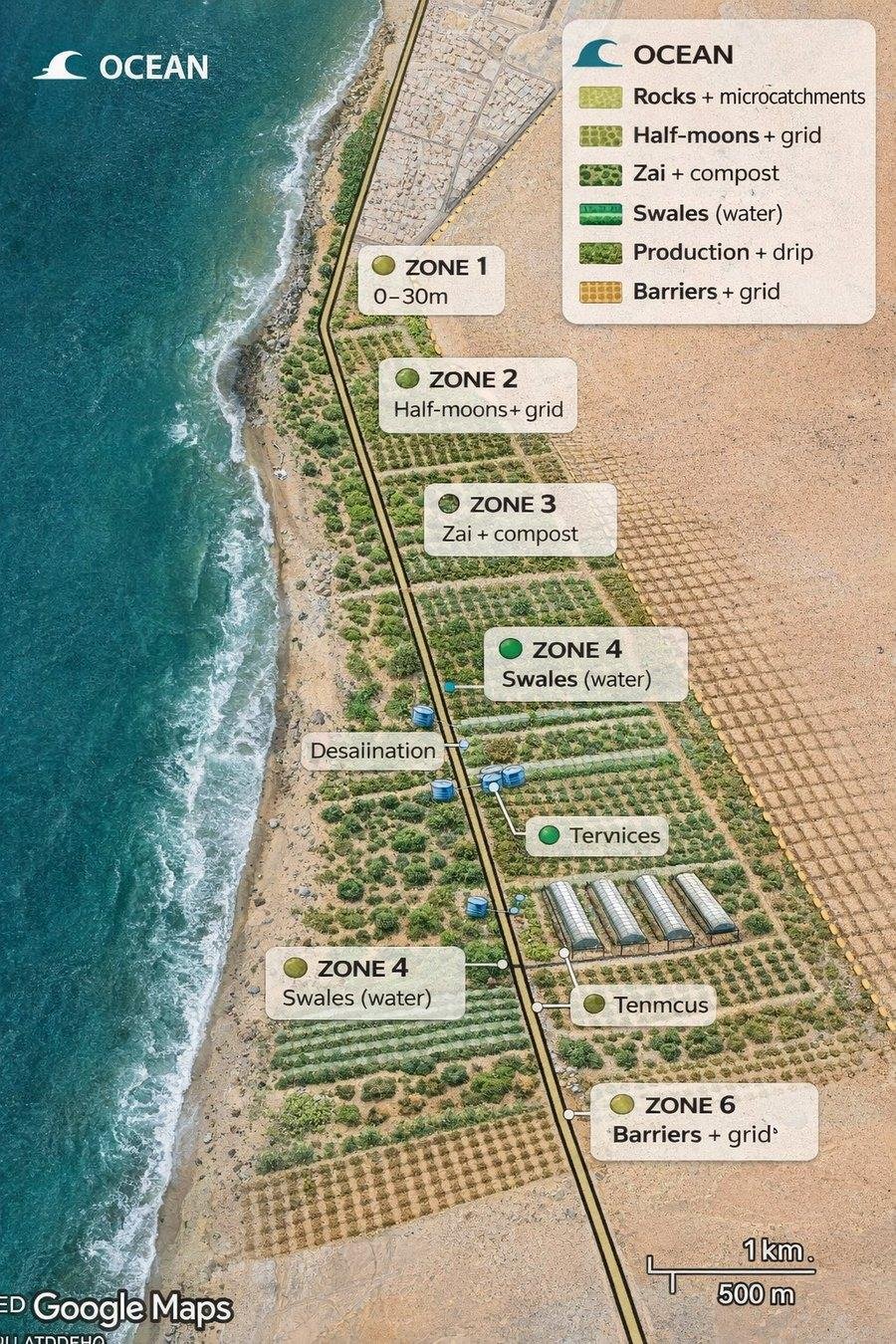
Zonal scheme of placement of herbs and plantings along the coast
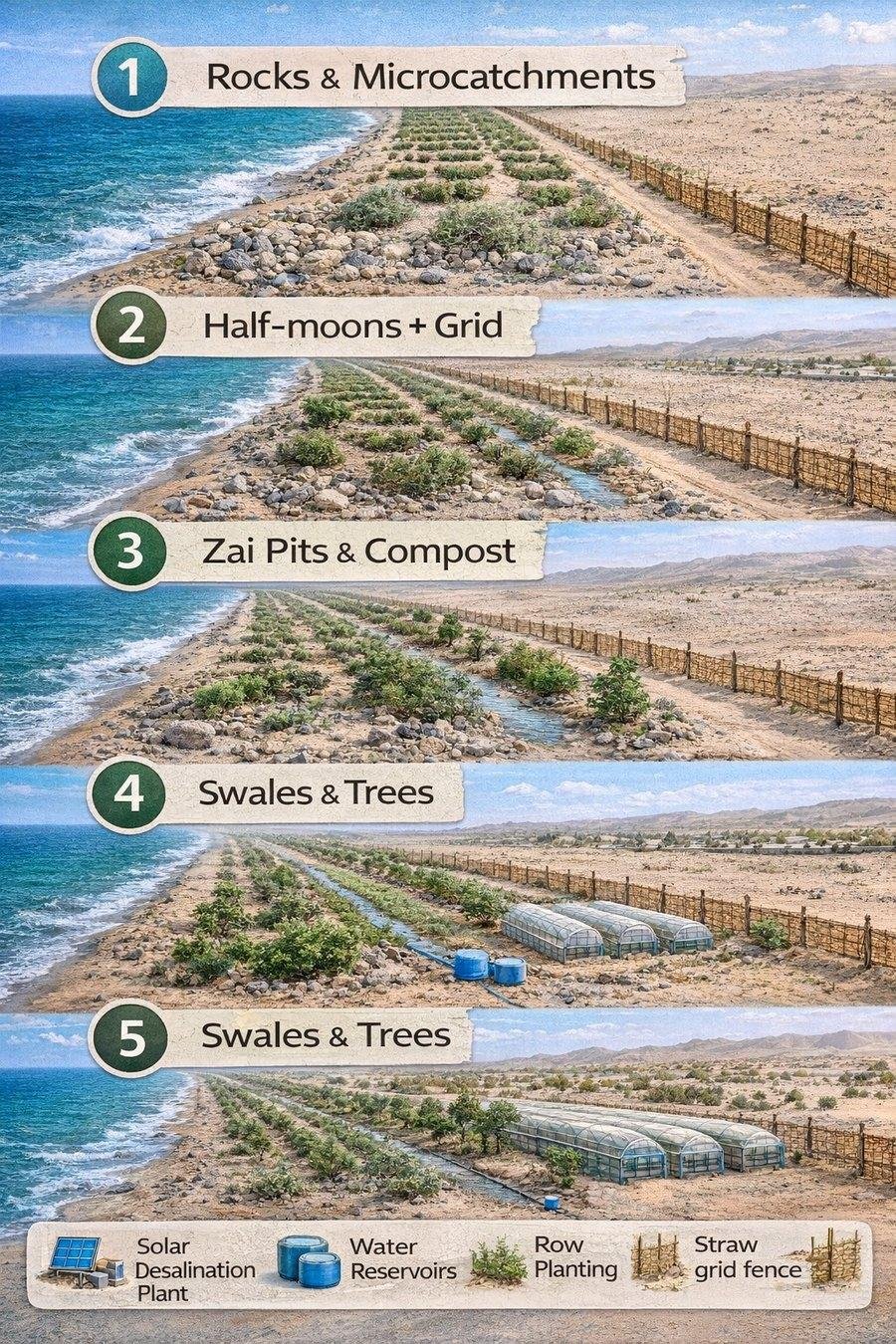
Engineering techniques for launching the vegetative layer
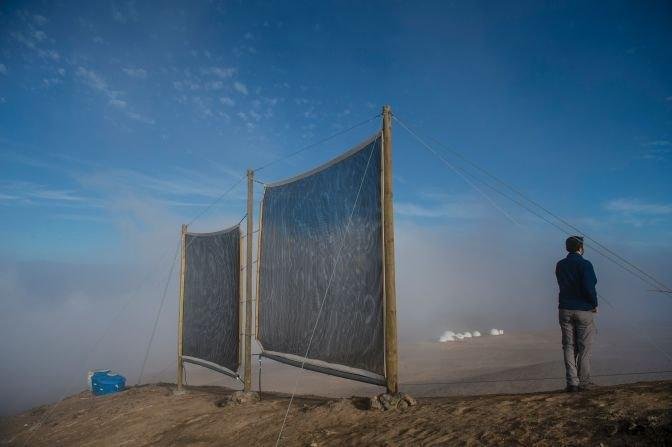
Mist collectors provide water context for protected grass areas
Base is a must
These species form the basis of the forage system. Their purpose is not to maximize yield, but to ensure survival, cover the surface, and gradually accumulate organic matter.
| View | Latin name | Water | Salt | Usage |
|---|---|---|---|---|
| Bermuda grass | Cynodon dactylon | very low | high | pasture, soil cover |
| Paspalum | Paspalum sheathed | low | very high | salt-tolerant lawn and forage cover |
| Panics | Panicum turgidum | very low | average | feed, sand fixation |
| European | Aeluropus littoralis | very low | very high | saline soils, first line of resistance |
| Sporobolus | Sporobolus spicatus | very low | high | sand, surface stabilization |
Level 2 - when watering
This group provides a stronger feeding effect, but requires water, salinity control, and protection from wind. It should be used after the base grass layer has been established.
| View | Latin name | Water | Salt | Usage |
|---|---|---|---|---|
| Alfalfa | Medicago sativa | average | low | feed and nitrogen accumulation |
| Clover | Clover spp. | average | low | soil improvement, fodder mass |
| Vetiver | Chrysopogon zizanioides | low | average | deep roots, moisture retention and slopes |
| Forage sorghum | Sorghum bicolor | low | average | feed production in hot climates |
| Millet | Pennisetum glaucus | low | average | forage crop for dry conditions |
Edible herbs for humans
A edible grass layer can be used in protected beds, near a water feature, a greenhouse, or in the partial shade of trees. It should not be established as the first layer of a project.
| View | Latin name | Water | Peculiarity |
|---|---|---|---|
| Purslane | Purslane | very low | super-resistant food plant |
| Amaranth | Amaranthus spp. | low | nutritious greens and seeds |
| Heat-resistant spinach | Spinacia oleracea | average | only in the shade and with regular moisture |
| Moringa leaves | Moringa oleifera | low | food leaf resource in a protected microclimate |
| Coriander | Coriander | average | spices, beds near the water source |
| Basil | Ocimum basilicum | average | aromatic plantings in partial shade |
Practical order
| 1. Stabilization Cynodon, Paspalum, Aeluropus and Sporobolus cover the sand and work with salt. | 2. Food Alfalfa, sorghum and millet are added when water is available. | 3. Food layer Purslane, amaranth and greens are planted only in protected microzones. |
|---|
Conclusion
For DREVO, the grass layer is a quick restoration tool. It binds the soil, provides organic matter, creates a forage base, and prepares the area for more complex layers: shrubs, fruit trees, and protected food plantings.