DREVO Coastal Regeneration Corridor
Integrated coastal and productive landscape restoration project.
Executive Summary
From coastal desert to productive system
The DREVO Coastal Regeneration Corridor aims to create a resilient coastal green corridor. The project combines sand protection, soil restoration, water management, marine biomass, nurseries, greenhouses, and gradual reforestation.
This is not a standalone planting program, but a system for transforming degraded coastal areas into productive ecological and economic zones.
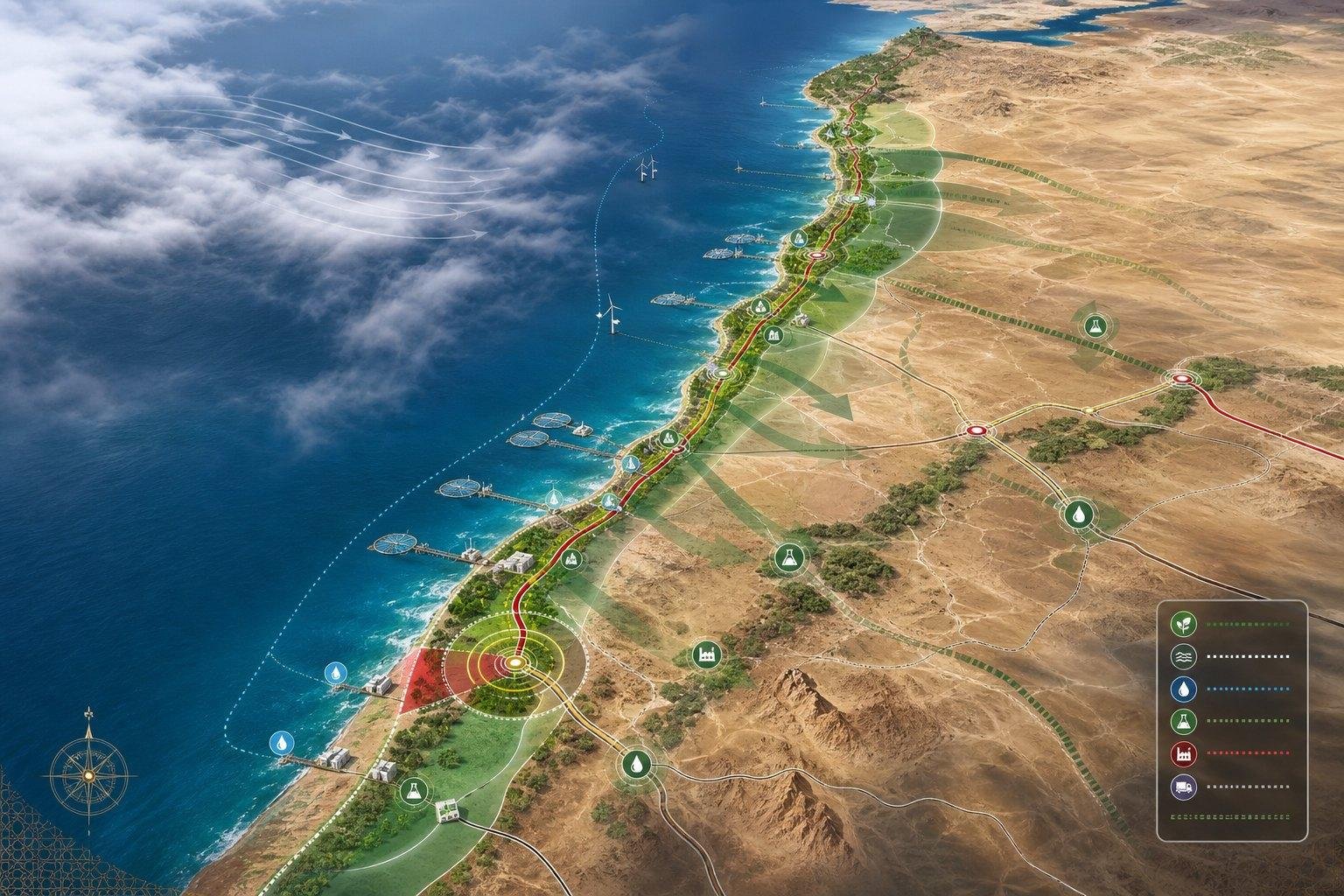
The project is envisioned as a scalable coastal corridor rather than a local garden plot.
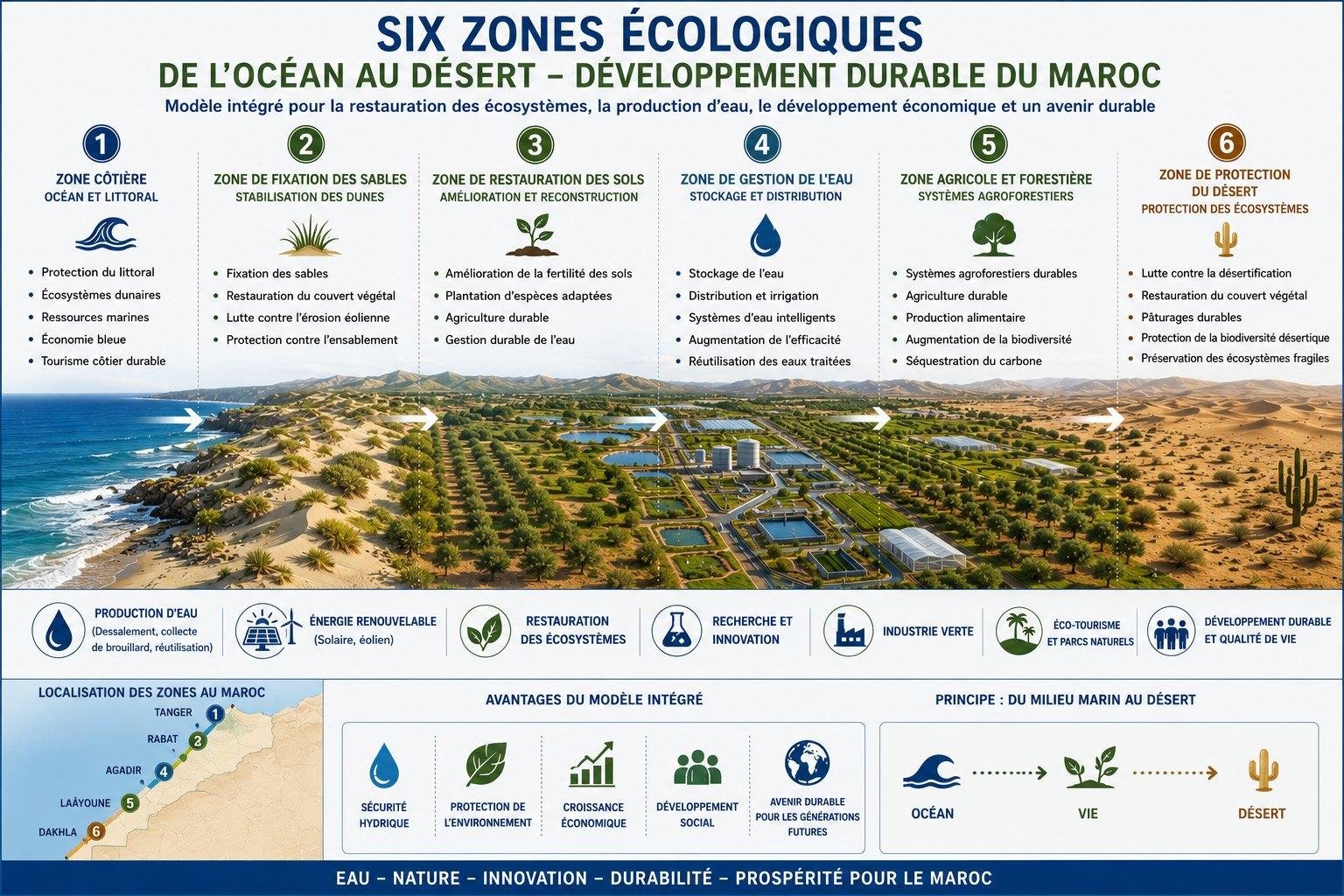
Six zones define the transition from salt ocean stress to a productive landscape and internal protection.
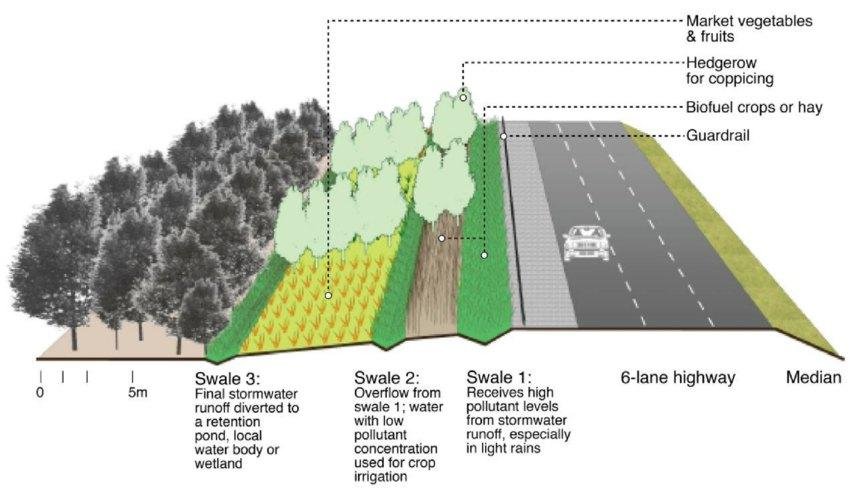
Microrelief, swale ditches and planting modules keep water where the system needs it.
Main goals
| Ecology Stabilization of coastal sands, restoration of degraded lands, reduction of erosion and creation of a microclimate. | Social effect Jobs, training, community engagement and local economic development. | Economy Agricultural products, feed, algae, nurseries, soil products and potential carbon credits. |
|---|
The key idea is that the corridor must simultaneously protect the land, create water in the system, build soil, and initiate productivity.
Six functional zones
The original design defines six zones extending from the ocean inland. Each zone has its own function and should not be confused with its neighbors: first, salt and sand resistance, then soil, water, trees, productive agriculture, and an internal dune barrier.
| Zone | Distance | Function |
|---|---|---|
| Zone 1 | 0-30 m | salt resistance and surface stabilization |
| Zone 2 | 30-100 m | sand stabilization and starting vegetation |
| Zone 3 | 100-300 m | soil formation and microbiology |
| Zone 4 | 300-800 m | water distribution, shrubs and trees |
| Zone 5 | 800 m - 2 km | productive agriculture |
| Zone 6 | 2-5 km | anti-desert and anti-dune barrier |
Main systems of the project
| System | Components | Role |
|---|---|---|
| Wind control | Sand nets, shrub barriers, landforming, dune stabilization | reduces sand transport and protects the young system |
| Water system | solar desalination, controlled use of groundwater, fog harvesting, rainwater harvesting, microrelief | provides starting and distributed water |
| DREVO solar desalination | reflector field, heater, heat exchanger, thin-film evaporator, condenser, brine control | 100-200 l/day per unit in a working model |
| Soil formation | compost pits, trenches, seaweed, organics, microbiology, biochar | transforms sand into a moisture-retaining medium |
| Nurseries and propagation | semi-buried greenhouses, seedling production, acclimatization zones, plant distribution system | creates its own database of planting material |
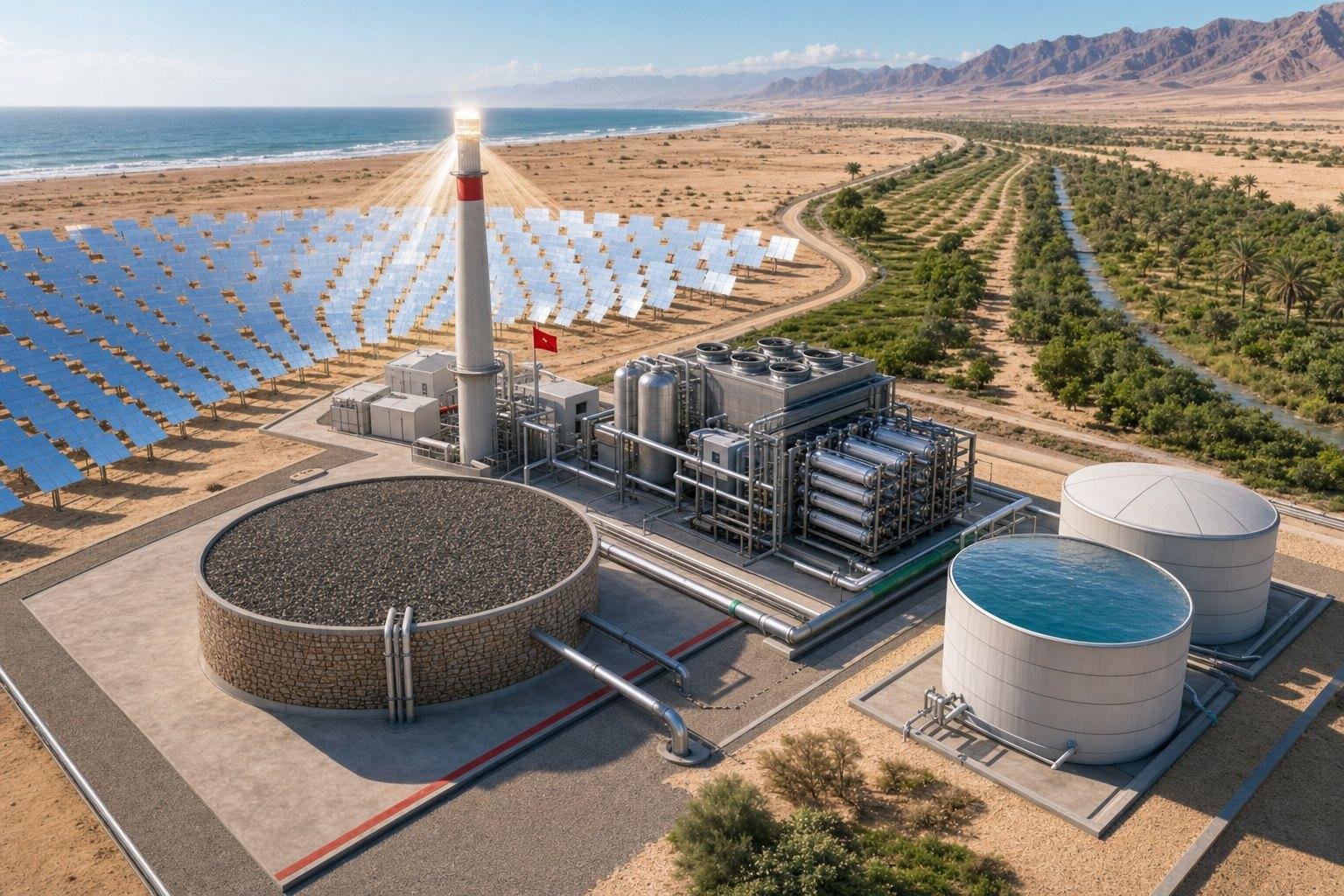
Desalination is considered in the project as a starting infrastructure, not the only support for the system.
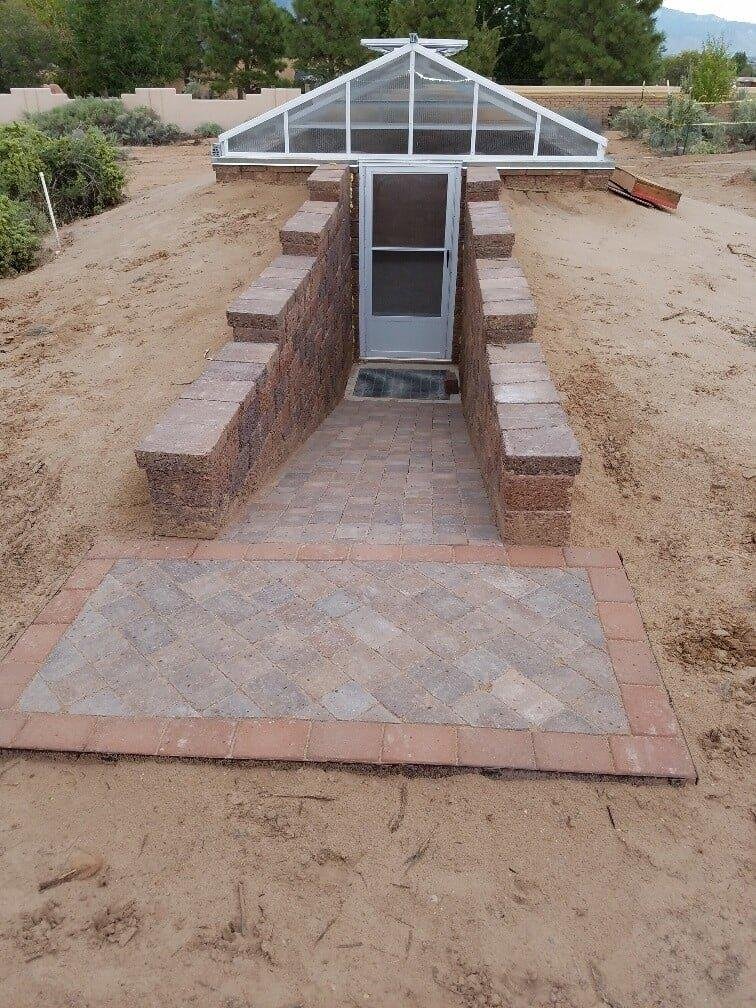
Semi-buried greenhouses allow for growing planting material in a protected microclimate.
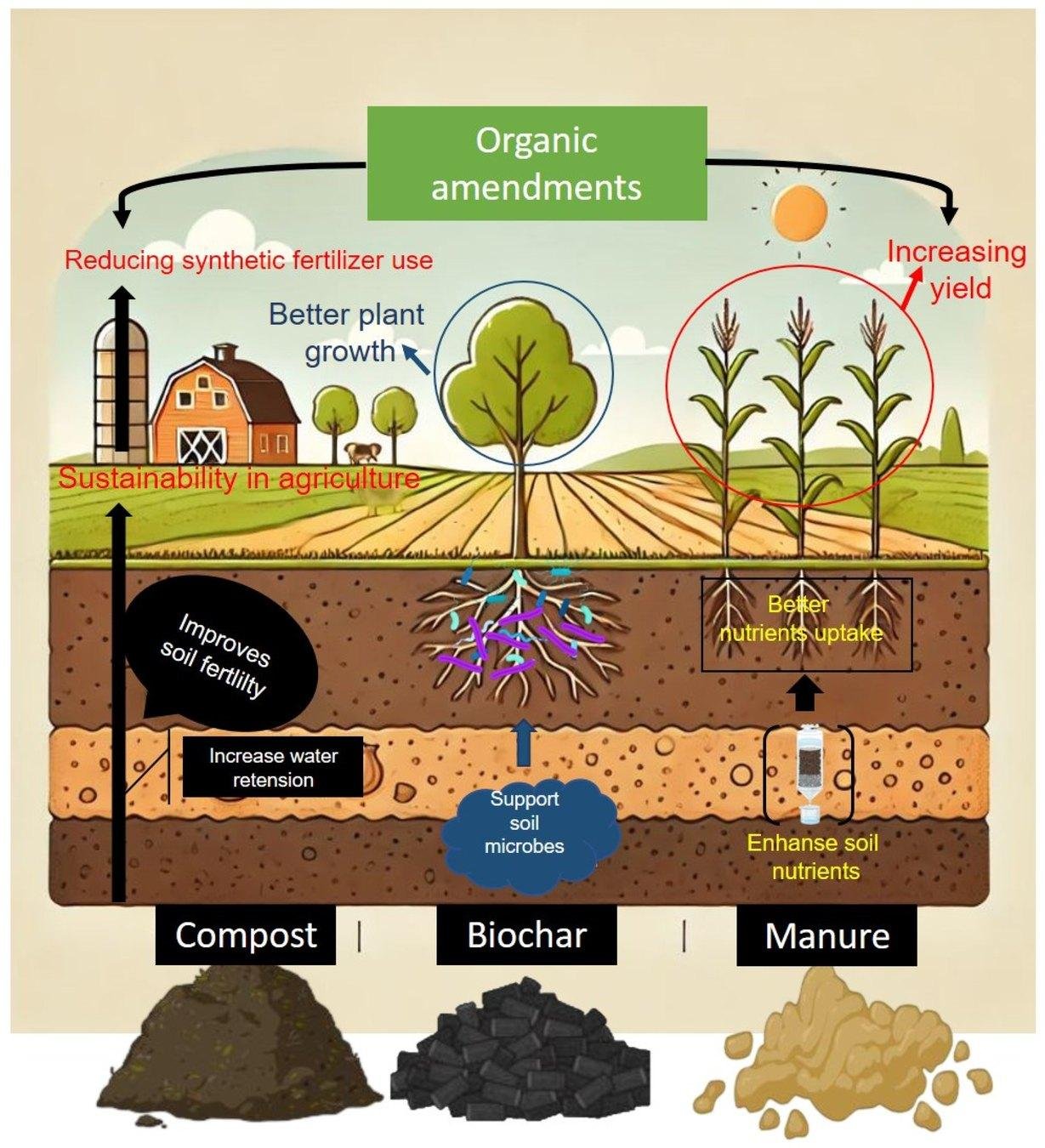
Organic matter, microbiology and bio-cover are the basis for soil restoration.
Seaweed integration
The project utilizes marine biomass as a strategic resource: for soil enrichment, compost, mulch, feed, and biofertilizers. The source material identifies Ulva, Gracilaria, and Sargassum as potential species for further testing.
| Resource | Usage | Meaning |
|---|---|---|
| Ulva | compost, mulch, quick organic material | convenient for mass soil launching |
| Gracilaria | biomass, feed and technological base | valuable for the productive block |
| Sargassum | mineral supplement, compost after salt control | can link a marine resource to a terrestrial system |
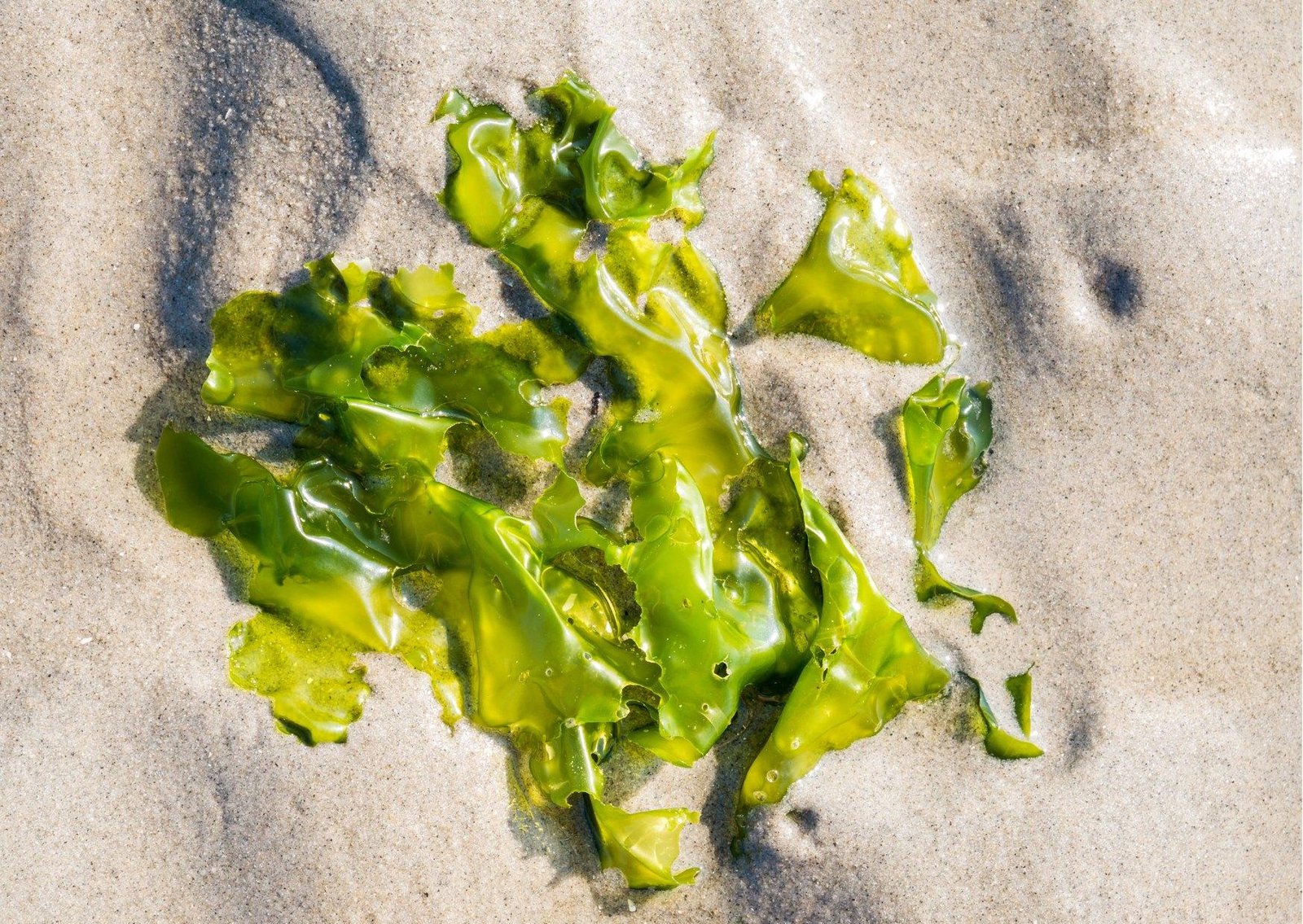
Algae link ocean resources with soil formation, mulch and biofertilizers.
Implementation phases
| Phase | Period | Basic steps |
|---|---|---|
| Phase 1 | 0-6 months | Site survey, wind and soil map, initial relief formation, primary sand stabilization |
| Phase 2 | 6-12 months | Water systems, construction of desalination modules, greenhouses, composting |
| Phase 3 | year 1-2 | planting of grasses and shrubs, expansion of microrelief, increase in nursery production |
| Phase 4 | year 2-4 | tree planting, agricultural production, expansion of productive zones |
| Phase 5 | year 3-6 | full ecosystem stabilization, commercial production, carbon credits |
Pilot scale 5 km
For the 5 km pilot, the source code provides infrastructure benchmarks that can be used as a working framework for preliminary planning.
| 30-60 desalination modules | about 24 greenhouses and nursery blocks | 200-300 m³ water accumulation | 200-400 composting units | 20-50 fog traps | 25-30 m³/day working scenario of water demand |
|---|
Economic model
A mature system should rely not on a single source of income, but on a combination of products: nurseries, agricultural products, algae, feed, soil products, and carbon credits. The initial project estimates a target of €1-3 million per year for a 30 km system in its mature phase, with a payback period of 4-7 years.
| Income stream | What is being sold or monetized | Role in the model |
|---|---|---|
| Nurseries | seedlings, adapted species, planting material | reduces dependence on external supplies |
| Agricultural products | fruits, feed, protected crops | creates regular income after stabilization |
| Seaweed | mulch, compost, biofertilizers, feed | connects ocean resources with land-based economies |
| Soil products | compost, biochar, restoration mixtures | supports scaling |
| Carbon credits | carbon and climate effects | additional financial layer |
Risks and success factors
The project's main risks are not related to a single crop or a single device, but to systemic errors: ineffective water, poor wind protection design, insufficient soil formation, and improper scaling.
| Risk | Consequence | Success factor |
|---|---|---|
| Water inefficiency | too high dependence on transportation or desalination | flow optimization, fog collection, microrelief, mulch |
| Poor wind protection | sand destroys plantings and terrain | sequence: wind → water → soil → plants |
| Insufficient soil formation | plants do not receive a stable environment | compost, algae, microbiology, biochar |
| Scaling too fast | pilot errors are copied over kilometers | modular implementation and local materials |
Conclusion
The DREVO Coastal Regeneration Corridor is a scalable system that transforms a coastal desert into a productive, self-sustaining ecological and economic zone. This isn't a planting project, but rather the creation of a living, self-sustaining environment.